
This essay is about respecting reality and, at first glance, it might seem unnecessary. I can see responses falling into one of two camps.
The first group consists of the type of person who almost revels in the complexity of reality, in the unknowability of it all, and who says things like “Aaaah, but whose reality?” Often with a triumphant smile. If you’re not the type, you know the type.
The second group is more likely to think the whole premise is obvious. “Of course reality matters; who in their right mind would argue otherwise?”
So there’s one group who will probably never be convinced by this essay, and another that already is.
But if we go a little deeper, something more interesting emerges. Many of us say that reality matters, and we mean it. But we do not consistently behave as if it does, particularly when it becomes uncomfortable.
This essay is for that second group. You only need to decide whether it applies to you.
As for the first group, you can see yourself out. Who’s to say this essay even exists?
The Law-Governed Universe
The Stoics based their philosophy on the observation that the universe is governed by laws. They talked about logos a lot, and that’s basically what it referred to: a set of laws bound by logic. It’s all pretty intuitive stuff: Things happen because they’re caused, and those causes are intelligible. We know apples fall to the ground, just like pretty much anything else does. They don’t sometimes fall to the ground and sometimes hover.
A universe that were not governed by laws is actually quite hard to imagine, and it certainly wouldn’t contain us or any other life; it would be far too unstable for the delicate balance life requires.
But there’s not much more to say about this; we all accept it. Even those in the first group, who might argue it’s all a bit more complex than that, accept it. If they didn’t live, at least to some extent, in accordance with these laws, they’d be dead.
So, that’s that, then; there are laws. So far, so good. But accepting that the universe is structured is one thing, living in accordance with that fact is another, especially when discomfort is involved.
The Truth Hurts
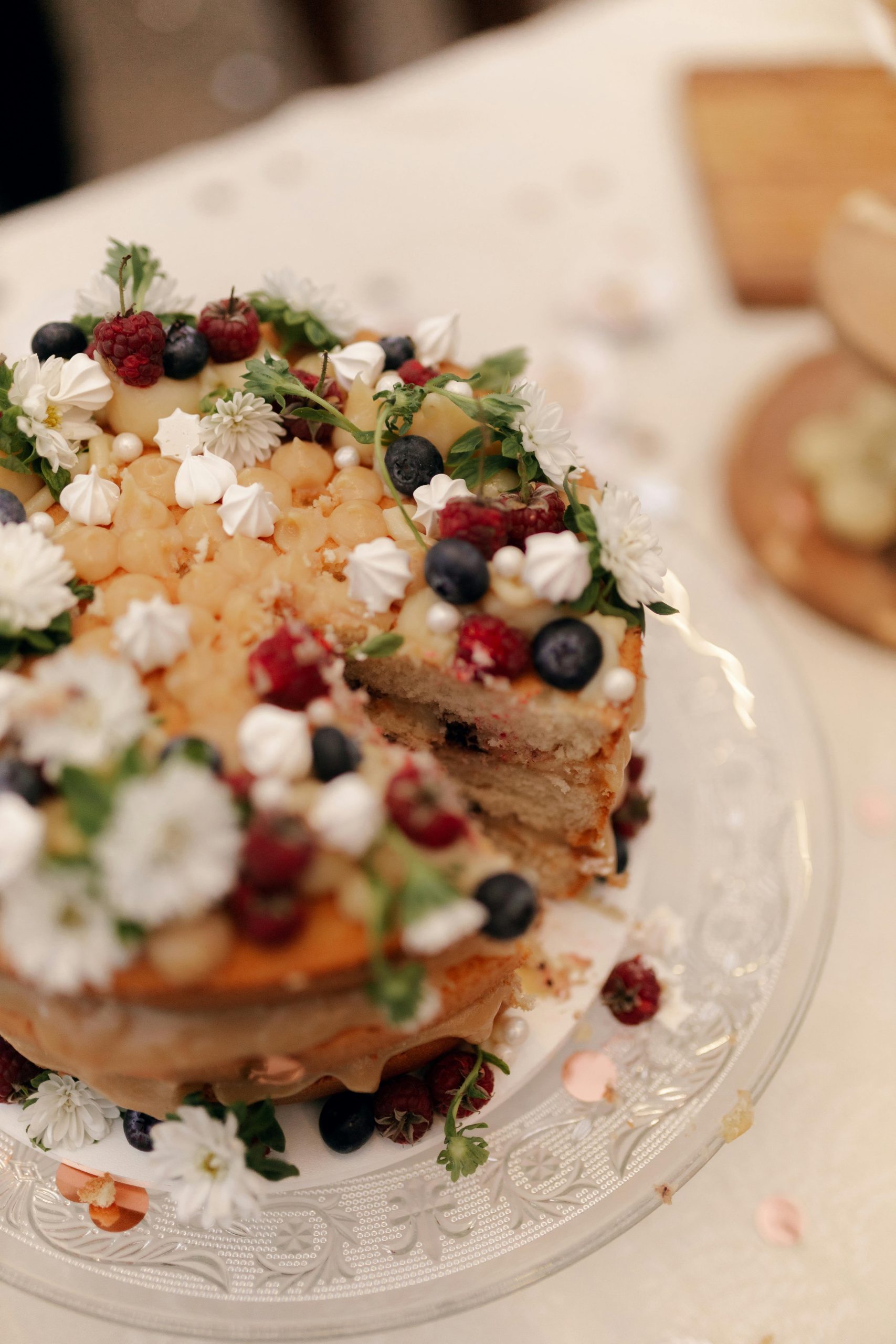
The problem with the universe, I find, is that things don’t always go my way. I love food, especially chocolate, cake and chocolate cake – that sort of thing. And this just happens to be the food that makes me fat.
My bank balance is not as high as I would like, and probably never quite will be. And even if I had all the money in the world, I wouldn’t be able to eat chocolate cake, nor cake, nor chocolate in the quantities I would like.
Because nothing is fair.
Or, to be a bit more mature about it, a structured universe comes with constraints, and they’re not in any way obliged to align with my wishes.
Often, we’re forced to accept reality because the evidence is immediate and overwhelming. If I crash my car, those constraints are pretty damn obvious, and they’ve caused expensive stuff to break. I really, really don’t want to deal with it, but it’s clear that I have no choice. The real difficulties start when things are a little more ambiguous – and they often are.
You see, if I eat some chocolate cake today, who’s really to say it’s going to make me fat? One piece? I could eat five large slices and I wouldn’t get fat! When I actually found myself to be a bit too porky, about three months ago, that was the result of countless pieces of cake, chocolate bars and, from my previous life, gallons and gallons of alcohol. I could see the result of years of gluttony, but “years of gluttony” is a far cry from “this piece of chocolate cake right here.”
How much fat will this one piece add to my body? How do we know I won’t do extra exercise and burn it off? All very difficult to answer, and so we find ourselves in an ambiguous situation.
Have you noticed that villains in films always justify their evil in the same way? Perhaps they conflate two concepts that are superficially similar but fundamentally different and ask “Are we so very different, you and I?” Or “In this crazy, topsy-turvy world, who’s to say what’s right and what’s wrong?”
That works as a device because we all have it in us to do that, at least to some extent: why not give myself the benefit of the doubt, even if I created that doubt?
We often experience life as a tangled web of causes and effects, and rather than doing our best to untangle them, we just eat some cake. And we are often motivated far more viscerally by present comfort than we are by future outcomes. If that means creating doubt, so be it.
And then there are times when doubt is the source of the discomfort.
Case Closed
The theme in The Stoa recently has been about jumping to conclusions, rather than grappling with uncertainty, and it’s a deceptively deep aspect of human behaviour. While, superficially, it looks very similar to exploiting ambiguity, it has a different motivation.
We humans are terrible at holding multiple mutually exclusive possibilities in our minds at once. It can be deeply uncomfortable, because it makes it hard to know what to do; it’s just too tempting to get our loops closed so we can move on.
Sometimes, this manifests itself in simple, ordinary ways, like guessing the motivations of other people. Other times, it involves really big questions, concerning death and such.
How can you live in a world where you don’t know whether people’s intentions are sincere or if anything lies beyond this mortal coil?
Well, you don’t have to. You can just guess the answer and get on with your day.
If you’ve seen these behaviours in yourself – both exploiting doubt and shutting it down – you’re in good company.
You Can’t Really Know Anything
Although this didn’t bother the Stoics all that much, it’s long been understood that it’s impossible to absolutely know anything. You know the problem, I’m sure; there’s always a gap between our model of the world and the actual world, and that gap is mediated by our senses.
That’s a serious concern; philosophers have been thinking deeply about ontology and epistemology for hundreds of years now, and there isn’t one, single neat way to connect the two fields. Simply put, though, ontology concerns the nature of things and epistemology is about how we know things. We have models of reality, but we can never be entirely certain that they’re accurate. And even those ideas that logically “must” be true depend on the universe operating logically. “An entirely black object is entirely white” must be false, as it’s a contradiction in terms.
And yet, how can we prove that the universe operates logically? We can’t because we’d have to use logic to do so.
So if you’ve got a problematic relationship with doubt, there are some good reasons for that!
Luckily, Postmodernism is on your side. The central idea in Postmodernism is that there is no truth, because it’s impossible to be certain what the truth is. While a stopped clock is right twice a day, we can never know for certain when that is.
And, you know what? I basically agree.
The problem is that we don’t really live that way, because we can’t. We build up internal models of reality in our minds, and we act as if they’re true, even when we acknowledge a degree of uncertainty. Nobody steps out of a 9th floor window expecting to survive because “we can’t know that gravity is real”. Maybe some people have – I don’t know – but I’m sure gravity asserted its presence quite convincingly.
So how do we do it? How do we make decisions when we’re not certain? Well, the same way science does it. Every moment we experience the world is a mini experiment. It’s not a particularly good one; we rarely isolate variables and test them under laboratory conditions. And that’s precisely why we have science. That methodology is science.
But we do build up an understanding of the world, imperfect as it may be. That keeps us alive and, with a little luck on our side, might even make us successful. Just as good poker players work with the probabilities, so do we, if in a less methodical fashion.
The more we do this, the more refined our world-models get. In theory, anyway. We make mistakes all the time, but we tend to be more careful the greater the risk. We don’t just eat random berries without knowing what they are, because they might be poisonous. But we have a high degree of certainty in the berries sold in supermarkets; partly because they’re labelled, and partly because we know, also with a high degree of certainty, that supermarkets and their suppliers are highly regulated. They’re just not allowed to sell poisonous berries.
We can’t ever be certain, but some ideas are more probable than others.
The central ideas of postmodernism are quite simple, also valuable, but are often generalised beyond all use. And that’s because it’s a short, tempting journey, from “We can’t ever be certain” to “Truth is an illusion.”
Like I say, nobody lives like that – particularly when the risk of being wrong is too high. But when we don’t perceive any risk in being wrong, we often indulge in wishful thinking, because we can always wish a world that’s far more comfortable than the real one.
As postmodernism has breached the walls of academia and entered mainstream discourse, it’s now quite common for people to say things like:
“There’s no such thing as objective reality.”
“We can’t know anything.”
“Reality is subjective.”
“Everything is a social construct.”
I’m sure you’ve heard such phrases yourself.
Quite apart from the fact that these phrases are all truth claims about objective reality and are therefore self-defeating and meaningless, they can also be dangerous.
But, because they sound wise and thoughtful and profound – as long as there’s no real risk to being wrong – we can use them to justify believing whatever the hell we like and look all deep at the same time!
So, as I say, if you have a problematic relationship, you’re in good company, and you have friends in high places.
But I also mentioned that this approach is dangerous, and here’s why.
Reality is Always Keeping Score, Even When You Can’t
Remember the cake problem? Let’s look closely at what is happening there.
It boils down to this: we’ve got two competing objectives.
You want to eat this cake.
You want to stay thin.
There’s a tension there because we’re observing a constraint in reality. You can’t eat this piece of cake and stay thin. But of course you can! If you just eat this one piece of cake, and never eat any more, then of course you can eat this cake and stay thin!
True. So just eat a piece of cake, say, once a month. Does that solve your problem? Does that resolve the tension?
If it doesn’t, it’s because you don’t trust yourself to stick to that rule, do you? If you did, you could eat the cake and then merrily live your life for another month without so much as one single sinful thought of cake.
There would be no problem. There would be no tension.
But here there is tension. That tension exists because you want this cake for the same reason you’ll want all the other pieces of cake you might encounter: because it’s delicious, satisfying and all creamy and sweet. And if you can’t resist the temptation now, there’s no reason to believe you’ll be able to in the future.
So what can you do? Well, you could not eat the cake and live with a moment’s discomfort. Or you could eat the cake and tell yourself that something will change in the future, something that gives you stronger willpower.
Hey, it’s a story, and right now it fills you with cake. Plus, for the time being, you’re still thin!
But this story only works because it makes a prediction about the future. And who’s to say that prediction won’t come true? Who’s to say you won’t develop stronger willpower in the future?
Nobody. But if that doesn’t happen, you’re going to get fat, aren’t you? And do you have any convincing evidence that your willpower will grow in the future? Do you understand that evidence as well as you understand how excessive intake of calories will make you fat?
And do you want to be fat? Perhaps you consider it an acceptable cost of being able to eat all the cake! But if so, there was never any problem, and there were no competing objectives after all; it was just a question of understanding the trade-off.
But there is a problem, isn’t there? You don’t want to be fat, and you do want the cake. That trade-off exists and you don’t like the terms. Without the trade-off, you could eat all the cake and not get fat, but that’s not the situation we’re dealing with.
The trade-off is: eat the cake now and get fat in the future, or skip the cake now and stay thin in the future.
You rationally know that skipping the cake and staying thin is the better tradeoff. The only reason there’s any problem at all is because that’s the tradeoff that goes against your current urge. If it didn’t, there would be no problem; the trade-off would be a no-brainer.
But if you obey your urges, and create stories to justify that, then all you’re doing is ruling out the better of two trade-offs and forcing reality to dish out the other.
The cake example is simple, but the structure is not unique to cake.
Wherever there are constraints, there are trade-offs. And wherever there are trade-offs, there is a better and a worse way of dealing with them, even if we can’t always see it clearly.
When we indulge in doubt, we don’t escape that structure. We just stop engaging with it properly.
Sometimes that means convincing ourselves that the worse option is fine. Other times it means avoiding the question altogether.
But in both cases, the result is the same: we drift away from the better trade-off, and reality enforces the alternative.
And what’s more, we all know this, don’t we? We know we make decisions, based on wishful thinking, that make our lives worse. Well, that’s a choice. These are not my rules, but the rules of a universe of constraints that doesn’t care about our stories.
The best we can do is make the decisions we know to be best. That’s the secret of living a life that meets our own values, as best we can, in a universe of constraints.
How long do you want to keep that secret from yourself?
Next essay: The Foundations Series: Part 3: Rational Agency – The Bedrock of Stoicism
Previous essay: The Foundations Series: Part 1 – Eudaimonia: My Experience
The Foundations Series main page
If you’re interested in the philosophical framework that eventually grew from these reflections, you can read my Stoicism Explainer here.